The hunt for legacy justice in Northern Ireland
When the dust settles on decades of vicious conflict and families on all sides are left bereft and angry, how do you begin to prosecute? And when time wears on without clarity, how do you secure justice for the victims?
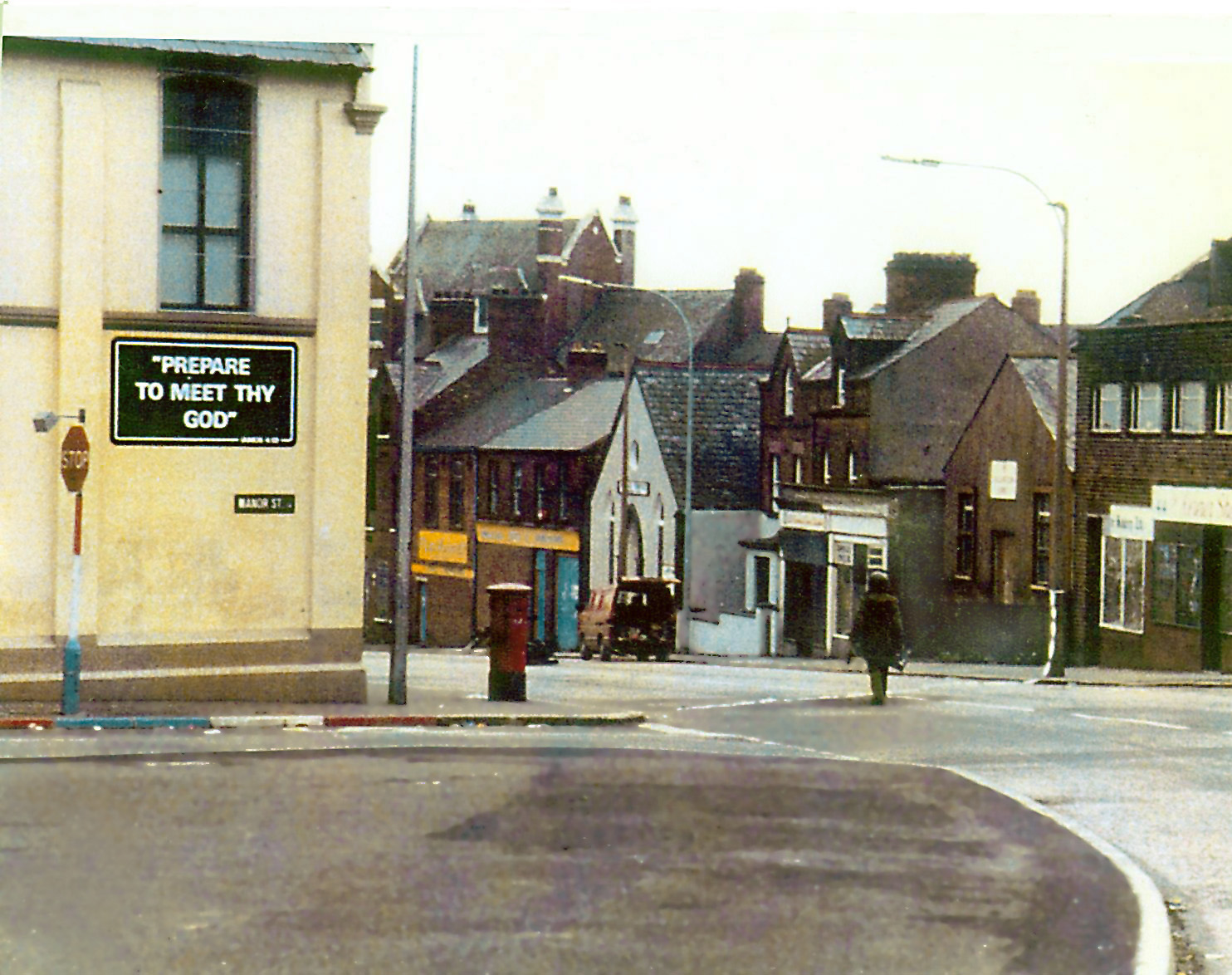
Almost sixty years after the Troubles broke out in Northern Ireland, the UK government has unveiled a package of significant amendments to a piece of legislation tabled last year to address those questions.
The Northern Ireland Troubles Bill seeks to address the legacy of a dark period by establishing mechanisms for the investigation of Troubles-era killings and drawing a line under repeated inquests. It is an emotionally evocative topic, particularly as the Government seeks to protect British Armed Forces veterans from repeated investigations into their conduct. the docket. dives in.
A quick history refresher
The Troubles are still in vivid living memory for many. Three decades of of violent conflict that left scars across generations, they broadly refer to the clash of Protestant unionists (supporting union with the UK) and Roman Catholic nationalist republicans (supporting unification with the Republic of Ireland), but also saw the breakaway of the Provisional Irish Republican Army from the old guard IRA, the emergence of unionist paramilitary forces, and the deployment of the British Army.
In a nutshell, sectarian tensions gave way to rioting in 1968, which escalated into armed violence. The events of the Troubles are stitched deep into the fabric of post-war British history: the assassination of Prince Philip’s uncle Lord Mountbatten in 1979; the death on hunger strike of imprisoned Bobby Sands in 1981; the bombing of the Conservative conference in Brighton in 1984.
And the involvement of the British Army has long been contentious. Particularly in relation to Bloody Sunday 1972, when British paras opened fire on a Catholic civil rights protest and killed 14 people. In 2010, the Saville Report concluded that the troops had faced no threat and had “lost control”, prompting former prime minister David Cameron to say:
What happened should never, ever have happened…
The government is ultimately responsible for the conduct of the armed forces and for that, on behalf of the government, indeed, on behalf of our country, I am deeply sorry.
After multiparty peace efforts, the Good Friday Agreement of 1998 instated a power-sharing Northern Irish Assembly and facilitated cross-border cooperation. Ireland removed its claims to the whole island from its constitution and the UK relinquished direct rule.
By the end of the Troubles, more than 3,500 people had been killed and more than 30,000 wounded. Estimates say that the British military was responsible for the deaths of 301 people, over half of whom were civilians. Around 1,440 British military personnel died – half of those directly killed by paramilitary groups.
What does this have to do with the law?
Families from all sides are seeking answers. Nearly thirty years after the Good Friday Agreement, investigations over Troubles-related killings continue. The Agreement did not contain transitional justice mechanisms, and there has been an ongoing attempt to establish them.
In 2014, the British and Irish governments signed the Stormont House Agreement, committing to initiatives including a Historical Investigations Unit for unsolved murders, and engagement with the families of victims. But the British government changed course in 2023.
It enacted the Legacy Act, a statute that aimed to draw a line under the past by introducing a conditional immunity scheme that limited criminal investigations into Troubles-related offences and ending all civil inquests. Met with widespread opposition, it was found by the High Court in Belfast and the Northern Ireland Court of Appeal to be incompatible with human rights. While the UK Supreme Court overturned part of their findings, the Act has remained controversial.
It also drew criticism from military veterans, who argued that the immunity clause gave paramilitaries and terrorists the same immunity as military personnel.
Last year, the British and Irish governments issued a Joint Framework for the replacement of the Legacy Act.
The Bill and its amendments
The Troubles Bill was placed before the House of Commons a year ago. Together with the amendments, it would mean:
Repealing the Legacy Act 2023
Establishing a Legacy Commission to investigate killings and an information recovery body
Establishing a dedicated legacy investigations unit within the Irish police
Requiring that the British Attorney General – and not the Public Prosecution Service for Northern Ireland - approve “serious” prosecutions
Stating that lawful acts of British Crown forces are not equivalent to the acts of paramilitaries and terrorists
Restricting the “cold-calling” of military veterans and allowing for remote attendance of hearings to avoid travel to Northern Ireland
Requiring that “compelling new evidence” be established before any witness can be approached
Barring former paramilitaries from the Victims and Survivors Advisory Group, and requiring at least one veteran representative on its panel.
Writing in The Times, UK defence secretary Wes Streeting and secretary of state for Northern Ireland Sir Chris Bryant paint the bill as a means to avoid the hijacking of “the search for truth and answers” by “those seeking revenge in the name of justice”.
Bryant has said the amendments are built to “ensure former Armed Forces personnel and police officers are treated with the fairness, dignity, and respect they deserve”, while Streeting has cited uncertainty faced by veterans over historic investigations and says the amendments will see that “decisions on historic cases properly take account of the operational realities faced by our Armed Forces, who often make split-second decisions in exceptionally difficult circumstances”.
And the Carltona principle
A legal curio here is the Carltona principle, an English law rule that junior ministers can exercise the powers of a government minister on their behalf. This came up in the case of former Sinn Féin president Gerry Adams, who was interned without trial in 1973 by an Interim Custody Order (ICO) not personally signed by the then-secretary of state for Northern Ireland.
In 2020, the Supreme Court quashed Adams’ conviction for escaping prison, saying the wording of the ICO scheme showed that the secretary of state must personally see the order. Adams is seeking compensation for unlawful detention.
The Bill’s drafters deem that judgment “erroneous”. It now explicitly state that ICOs can be made on behalf of the secretary of state (under now-defunct 1972 legislation), with the effect that those interned under the Carltona principle cannot see their convictions quashed – and the quashing of any convictions only because of the principle is disregarded for compensation.
Reactions to the Bill
The path of the Bill has not run smoothly so far. MPs complained when it was introduced into the Commons last year that they had not been allowed to first see the draft text – something Democratic Unionist Party leader Gavin Robinson described as “disgraceful”.
In November, the Minister of Justice of the Northern Irish Assembly Naomi Long refused to seek a legislative consent motion (a motion for Assembly agreement to the UK Parliament considering a devolved matter). While acknowledging that all but the ICO provisions might engage the consent process, she said the Bill had been determined unilaterally by the UK government, and that she had had no sight over the Bill.
Long cited a “lack of meaningful engagement by the UK Government on the detail” and said she did not have the resources to “drop important legislative priorities to implement a UK Government policy over which I have no control”.
“The UK Government has never adequately resourced legacy and this has not changed with the introduction of the Bill.”
Elsewhere, families of victims killed in the Troubles have criticised the government for delays in passing the Bill, for “appeasement to the veterans” and the involvement of the Attorney General.
Conservative MP Lincoln Jopp spoke in favour of the Bill last year. He served four tours of Northern Ireland during the Troubles and said the legislation could draw a line under the “never-ending cycle of investigation, inquiries, inquests and prosecutions used as a punishment tool on our veterans” while not being “a free pass”.
Jopp spoke of the split-second decisions required by military in the context of paramilitary and terrorist activity. He cited an instructor who had answered his uncertainty by telling him it is “sometimes better to be tried by 12 men than carried by six”.
A small debate on the Bill takes place today. It will be voted on by MPs next week before moving to the House of Lords, if passed.